As we move towards an increasingly connected world, understanding the differences between 5G and 4G smartphones becomes crucial. Renowned technology expert Dr. Emily Carter emphasizes this clearly: "The leap from 4G to 5G is not just about speed; it's about smarter connectivity." This insight highlights the profound impact 5G technology has on our devices and daily lives.
5G smartphones are designed to offer lower latency and enhanced network capacity. Users can expect faster download and upload speeds, making streaming and gaming smoother. In contrast, 4G smartphones, while still powerful, may struggle during peak usage times. The difference in performance is particularly noticeable in crowded areas, where 5G can significantly outperform 4G.
However, the transition to 5G is not without its challenges. Many consumers are still unsure of what to prioritize when selecting a smartphone. Questions arise about compatibility, availability, and the actual benefits of 5G. Understanding "What are the main differences between 5G and 4G smartphones?" is essential for making informed purchasing decisions as we embrace this new era of technology.
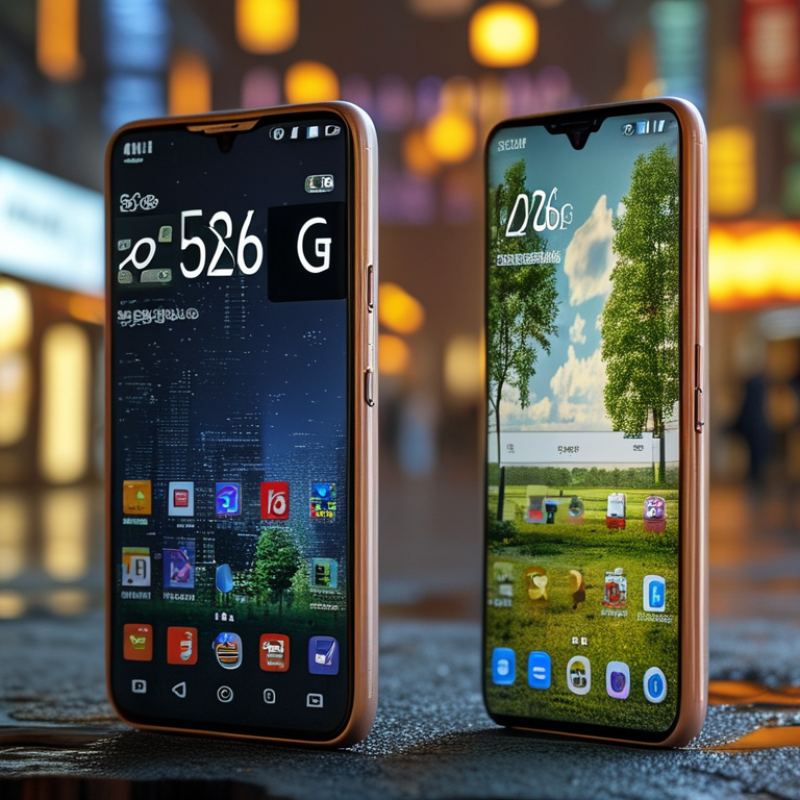
Understanding the Key Differences Between 5G and 4G Technology
The advent of 5G technology marks a significant leap from its predecessor, 4G. The primary difference lies in speed and latency. 5G networks can deliver speeds up to 20 Gbps, whereas 4G maxes out around 1 Gbps. This stark difference is crucial for applications requiring high bandwidth, such as augmented reality and high-definition video streaming.
Another important aspect is latency. 5G boasts latencies as low as 1 millisecond, while 4G typically ranges from 30 to 50 milliseconds. This improved responsiveness can drastically enhance user experiences in gaming and real-time communications. According to the Global System for Mobile Communications (GSMA) report, by 2025, 5G is expected to account for over 1.7 billion connections worldwide, illustrating its rapid adoption.
In addition, 5G employs advanced technologies like beamforming and massive MIMO, which are not present in 4G. These innovations increase capacity and efficiency, enabling more devices to connect simultaneously. However, the transition to 5G is not without challenges. Coverage remains inconsistent in many areas, and devices need to be equipped with specific hardware to leverage these benefits. Users should be aware that while 5G offers promises, real-world experiences may still be developing.
Identifying Hardware Specifications for 5G-Compatible Smartphones
When distinguishing between 5G and 4G smartphones, hardware specifications play a crucial role. A key factor is the modem technology. 5G smartphones typically use modem chips like Qualcomm's Snapdragon X55 or X60. These modems support both 5G and legacy networks. According to a recent industry report, approximately 50% of all smartphones shipped in 2023 were 5G-capable, indicating significant adoption. This shift highlights the need for consumers to identify compatible devices.
Another telling specification is the antenna design. 5G smartphones often feature advanced antenna systems. These systems can include multiple input and output configurations (MIMO). They enhance connectivity, especially in dense urban areas. Research shows that up to 60% of performance comes from effective antenna designs. Some 4G smartphones may lack this complexity, which affects their performance in crowded spaces.
Additionally, the physical size of smartphones can reveal information. 5G devices may be slightly bulkier due to additional components. However, manufacturers strive for sleek designs, leading to trade-offs in consumer choices. As the 5G network expands, understanding these specifications becomes essential. Users should be cautious when buying smartphones without verifying these details.
Evaluating Network Performance: Speed and Latency Comparisons
When comparing 5G and 4G smartphones, network performance is key. Speed and latency play crucial roles in user experience. 5G typically offers download speeds of up to 10 Gbps. In contrast, 4G usually peaks around 1 Gbps. This difference can greatly impact activities like streaming or gaming.
Latency is another critical factor. 5G networks can achieve latency as low as 1 ms. For 4G, latency averages around 30-50 ms. Lower latency means quicker responses. This is essential for applications like virtual reality. Users may feel frustrated with delays on 4G.
It's important to note that not all 5G networks are equal. Some areas may only provide partial 5G coverage. Users should evaluate their specific locations. Coverage varies widely between cities and rural areas. A 5G phone might not always guarantee the fastest experience. Understanding these nuances is vital for making informed decisions.
Exploring Compatibility with 5G Networks: Sim Cards and Carriers
As 5G technology continues to roll out globally, understanding its compatibility with smartphones is crucial. A significant factor in this compatibility involves the type of SIM card used. According to a report by the GSMA, over 2.5 billion 5G connections are anticipated by 2025. However, not all smartphones equipped for 4G can seamlessly transition to 5G networks.
The core requirement for accessing 5G is having a compatible SIM card. Most modern carriers provide a dual SIM option, making it easier for users to switch between network types. Some carriers may require users to replace their existing SIM cards to unlock 5G capabilities. Unfortunately, this isn't always communicated effectively, leading to confusion. A study from TeleGeography highlights that nearly 30% of users were unaware that their SIM card could be a limiting factor for 5G access.
Carrier compatibility also plays a vital role. Different carriers may support various 5G bands. Some smartphones are designed to work with specific bands, which can affect speed and coverage. Thus, a user cannot assume that purchasing a 5G phone guarantees optimal performance across all networks. This misalignment between phone capabilities and carrier infrastructure indicates a need for further industry education on 5G compatibility.
2026 How to Distinguish Between 5G and 4G Smartphones?
| Feature |
4G Smartphones |
5G Smartphones |
| Network Compatibility |
Supports LTE networks |
Supports 5G NR and LTE |
| Maximum Download Speed |
Up to 100 Mbps |
Up to 10 Gbps |
| SIM Card Requirements |
Standard 4G SIM |
5G compatible SIM required |
| Availability of 5G Bands |
N/A |
Multiple 5G bands supported |
| Battery Consumption |
Lower consumption |
Higher consumption due to 5G |
| Cost Range |
Generally lower |
Generally higher |
Recognizing Software Features Exclusive to 5G Smartphones
When trying to distinguish between 5G and 4G smartphones, examining software features offers key insights. 5G smartphones are equipped with advanced software that enhances their connectivity capabilities. They often include features like enhanced mobile broadband, ultra-reliable low-latency communication, and massive machine-type communication. These functions are crucial for accommodating the demands of a faster, more connected world.
Another notable software aspect is support for advanced Wi-Fi standards. Many 5G smartphones also utilize Wi-Fi 6 or Wi-Fi 6E. These technologies allow for better performance in crowded spaces. They enable superior speed and efficiency when streaming or gaming, which is a significant improvement over typical 4G devices. Furthermore, 5G smartphones tend to have tailored applications that leverage their fast networks, offering functions that take advantage of the improved bandwidth.
However, it’s essential to remain critical when assessing these features. Not every app or service is optimized for 5G, and users may not always experience immediate benefits. It's a landscape that continues to evolve. The promise of 5G software features brings great potential, but not every device equally delivers on this promise. Careful consideration and research are recommended before making a decision.
Comparison of 4G and 5G Smartphone Features
Conclusion
The article "2026 How to Distinguish Between 5G and 4G Smartphones?" delves into the crucial aspects that differentiate 5G smartphones from their 4G counterparts. It elaborates on the key technological advancements of 5G, highlighting faster speeds and lower latency, which significantly enhance user experiences. The discussion extends to hardware specifications, emphasizing that 5G smartphones typically feature more advanced chipsets and antennas designed to handle the demands of next-generation networks.
Additionally, the article addresses the compatibility of 5G smartphones with various networks, focusing on the necessary SIM cards and carrier support for seamless connectivity. Finally, it touches upon software features unique to 5G devices, such as improved security and enhanced capabilities for applications reliant on high-speed data. By addressing the question, "What are the main differences between 5G and 4G smartphones?", the article serves as a comprehensive guide for consumers looking to understand the benefits of upgrading to 5G technology.

 Elite Smartphone